If you’re stuck talking to people who never buy, your problem is qualification, not closing. BANT is a simple 4‑step framework that tells you who to chase and who to drop. Have you ever had a ‘perfect’ call that went nowhere because the prospect ‘wasn’t ready?
This is where the BANT framework can help you.
What is BANT
BANT is a lead qualification framework used in sales to decide if a prospect is worth pursuing.
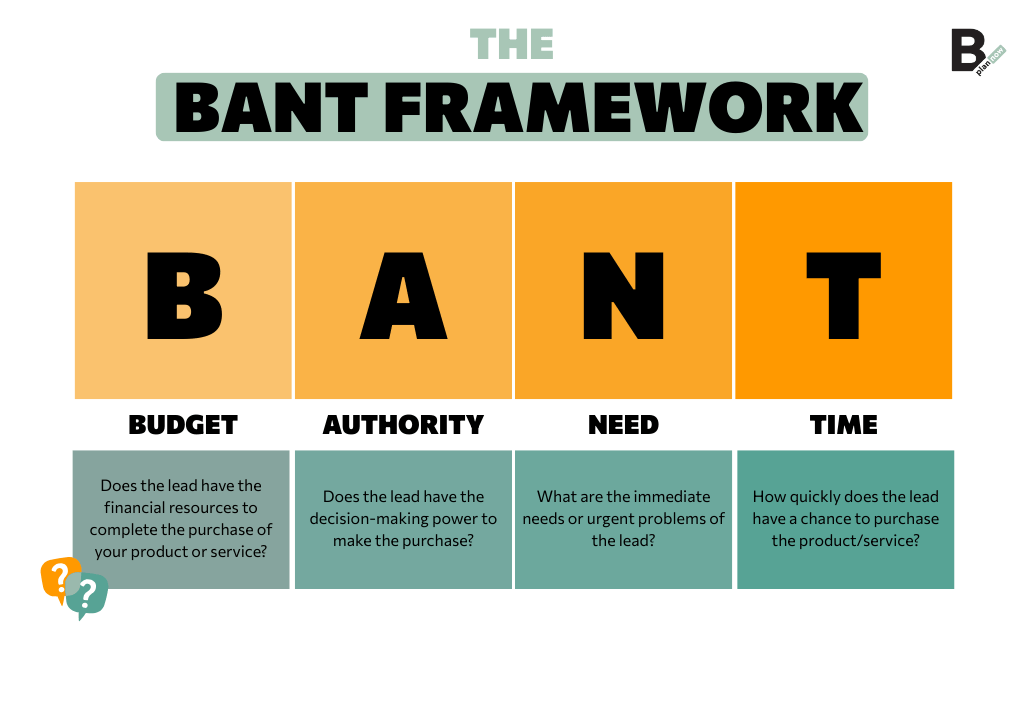
The acronym stands for Budget, Authority, Need and Timeline. Four checks to see if someone is realistically likely to buy.
It protects time and focuses you on high‑probability deals, especially in B2B or higher‑ticket sales.
Sample Questions:
B = Budget – Can they afford a solution like yours?
You’re not just asking “What’s your budget?”; you’re trying to see if there is money and willingness to spend.
Example question could be:
- “How have you budgeted for this type of project in the past?”
- “Roughly what range were you expecting to invest to solve this?”
A = Authority – Are you talking to the decision‑maker or an influencer?
You need to understand who signs off and who’s involved in the buying process.
Example question could be:
- “Who else will be involved in the final decision?”
- “What does your approval process usually look like for something like this?”
N = Need – Do they actually have a problem you can solve?
This is about pain and impact. If there’s no real need, there’s no real deal.
Example question could be:
- “What’s the biggest challenge you’re trying to fix right now?”
- “What happens if this doesn’t get solved in the next 6–12 months?”
T = Timeline – When do they want to move?
You’re checking urgency and realistic timing. A “maybe next year” is very different from “we need this live in 90 days.”
Example questions could be:
- “When would you ideally like to have a solution in place?”
- “Are there any key dates or events driving this project?”
To learn even more about the BANT framework, take a look at our new video over on our YouTube channel:
If your team needs support with sales training, sales coaching, or more structured sales training programmes, you can explore our sales training courses, review our free sales training resources, or read more on how to ask great sales questions and consultative selling to strengthen your approach to discovery.
To get in touch with our team, call us on 01704 889325, email us at info@salestrainingint.com or fill in our online contact form.