This guide walks through the three message moments that matter most, the mistakes that quietly kill reply rates, and the two numbers you should track to know whether any of it is working.
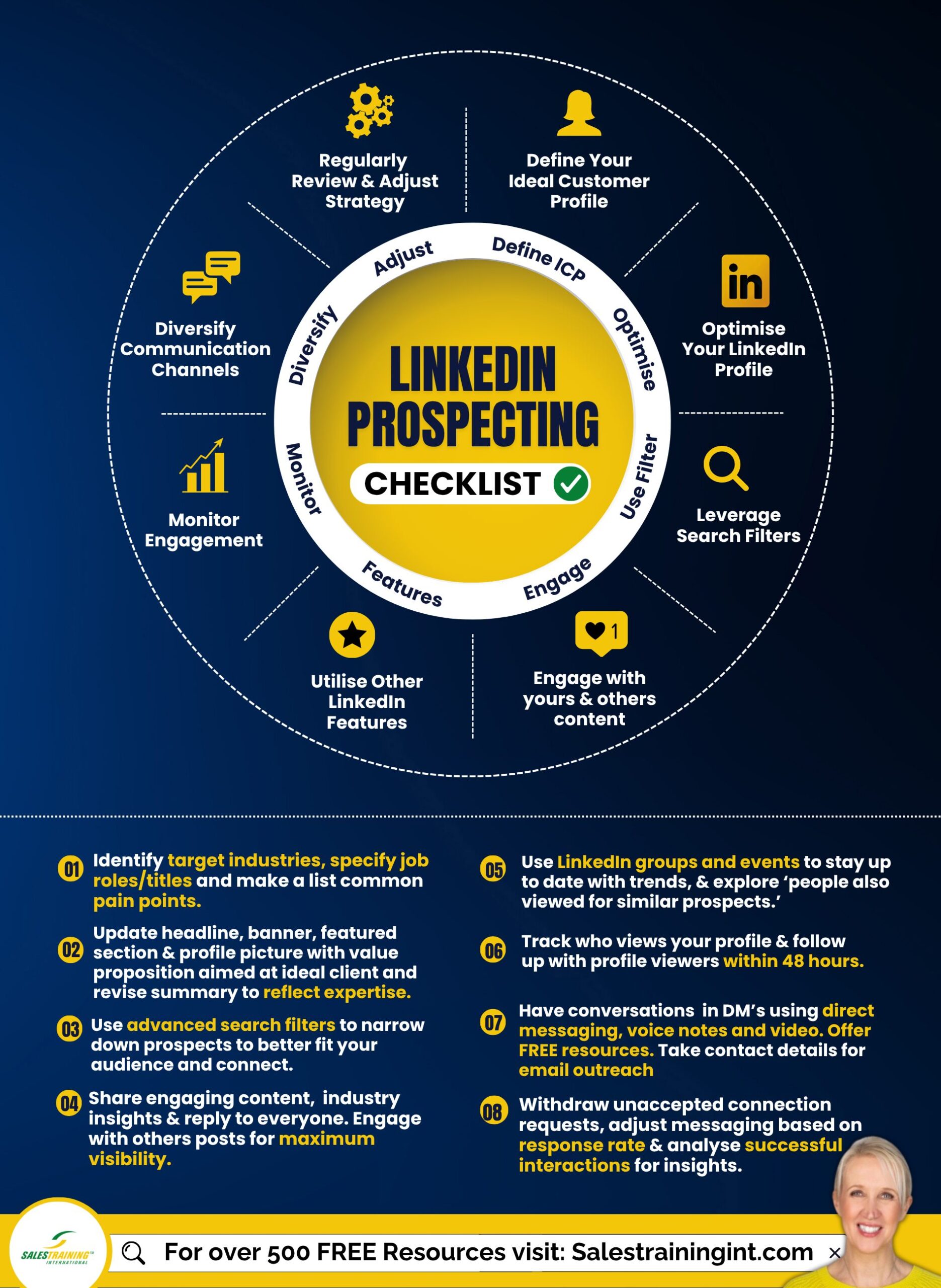
The Three Moments That Decide Whether You Get A Reply
STEP 01
The connection request
Short, specific and focused on them. No pitch, no calendar link, no ask for their time.
STEP 02
The first message
Continue the reason you connected and ask one light question that is easy to answer.
STEP 03
The follow-up
Add value rather than guilt. Give them a fresh reason to reply, then know when to stop.
Why Most LinkedIn™ Outreach Gets Ignored
A lot of LinkedIn™ outreach fails before the conversation has even started. Three habits cause most of the damage.
The pitch slap
Many people accept a request and immediately receive a long sales message. That experience is one of the quickest ways to lose trust.
Copy and paste templates
People spot them quickly, especially when the message could have been sent to anyone. Fake personalisation is just as weak.
No warm-up at all
If someone has never seen your name, never had a comment from you and never read your content, a sudden message feels abrupt.
Before You Send Anything
Three quick checks before you write a single LinkedIn™ connection request message.
CHECK 01
Does your profile back you up?
Most prospects look at your profile before accepting. If your headline, photo or about section is unclear, your message has to work much harder. Start with our guide on how to set up your LinkedIn™ profile.
CHECK 02
Have you warmed things up?
Comment thoughtfully on a post, react to something they have shared or join a relevant discussion. Our guide to LinkedIn™ groups shows how groups support better lead generation.
CHECK 03
Do you have a real reason?
A job change, a recent post, company news, an event or a shared topic all give context. Without one, even a well-written message feels thin.
How To Write A Connection Request Note
A good connection request note is short, specific and focused on the other person. It should not include a pitch, a calendar link or a request for their time. The only job is to make the connection feel relevant enough to accept.
Invitation note limits vary by account type. LinkedIn™’s help page says some users can add personalised messages of up to 200 characters, while other industry sources still reference 300 characters for Premium or Sales Navigator accounts. The safest approach is to write tightly and keep the note brief.
Does a personalised note actually help?
Not in the way most people assume. A 2026 Belkins study of 11.5 million requests found this:
ACCEPTANCE RATE
27.6% v 25.3%
Requests without a note were accepted slightly more often than requests with a personalised note.
REPLY RATE AFTER ACCEPTANCE
8.2% v 5.3%
Personalised notes produced a much stronger reply rate once the connection was made.
Three connection request examples
REFERENCING A POST
Hi Sarah, I saw your post about improving sales handovers between marketing and sales. The point about lead quality stood out. I work with sales teams on similar challenges and would be happy to connect.
SHARED GROUP OR EVENT
Hi James, I noticed we are both in the same sales leadership group and saw your comment on pipeline reviews. I thought it would be useful to connect as we seem to work around similar topics.
COMPANY TRIGGER
Hi Priya, I saw your team has recently expanded. I have a free guide for growing sales teams which may help. Would you like to connect?
The First Message After They Accept
This is where many people undo the good work of a relevant connection request. The better approach is to continue the reason you connected and ask a light question that is easy to answer.
Keep it short. As a guide, aim for under 400 characters. A short message is easier to read and far less likely to feel like a sales script. What works best is offering something of value to them.
GOOD · BASED ON THEIR CONTENT
Thanks for connecting, Sarah, and welcome to my network. Your recent post about leads was something a lot of sales teams are struggling with. I have a free lead gen e-book. Would that be useful to you? If so, let me know and I am happy to send it over.
GOOD · SOFT, RELEVANCE-BASED
Thanks for connecting, Priya, and welcome to my network. I noticed the new regional office announcement. When teams expand like that, sales consistency often becomes harder to manage. I have some free guides on sales team expansion which may be helpful. Let me know if you would like me to send them over?
AVOID THIS
Thanks for connecting. We help businesses increase sales and I would love to show you how. Are you free for a 30-minute call this week?
Why it fails: the relationship is too new, the request is too big and the sender has not earned the conversation yet.
Following Up Without Being A Pest
Follow-up messages should add value, not guilt. “Just bumping this” rarely gives a prospect a reason to reply. A better follow-up offers something useful, asks a simpler question or links back to the reason for the original message.
A sensible cadence is to wait around five working days. If there is still no reply, one or two more LinkedIn™ follow-ups is usually enough. After that, switch channel or leave the prospect alone for now. It is also worth leaving a voice note, as these tend to get a far higher response rate.
FOLLOW-UP EXAMPLE
“I saw another post this week about lead gen issues, so it made me think of our earlier message. In our experience, having multiple lead channels really helps. Our lead gen e-book talks about this and many other ideas in much greater detail. Do let me know if you would like a copy?”
Six Mistakes That Kill Reply Rates
If your outreach is not working, one of these is usually the reason.
01
Automation blasts
Sending the same message to a large list damages reply quality and can put your account at risk.
02
Fake research
“I see we share 12 connections” is not personalisation unless it gives the message useful context.
03
Walls of text
Long messages feel like work. Keep it short and give one clear reason to respond.
04
Selling in message one
A pitch straight after acceptance feels rushed. Start a conversation before asking for time.
05
Voice or video to strangers
These can feel intrusive when there is no relationship yet. Earn the right first.
06
Ignoring their activity
If they are posting about one issue and your message ignores it, the outreach feels lazy.
How To Measure And Improve
Track two numbers separately. Together they tell you whether the problem is your targeting or your message.
METRIC 01
Acceptance rate
Tells you whether your profile, targeting and connection request are working. Targeted campaigns often sit in the high 20s to mid 40s. Below 20 percent usually points to targeting or profile issues rather than message copy alone.
METRIC 02
Reply rate
Tells you whether the conversation is relevant enough once the connection is made. A healthy acceptance rate with a poor reply rate means the first message is the thing to fix.
LinkedIn™ Connection Request Message FAQs
Should you add a note to a LinkedIn™ connection request?
How long should a LinkedIn™ message be?
What should you say when someone accepts your connection request?
How many times should you follow up on LinkedIn™?
Better LinkedIn™ Outreach Starts With Better Conversations
Connect like a human, continue the conversation before selling and follow up with something useful. Our LinkedIn™ training helps teams understand the full social selling process, from profile to pipeline. You can also read more about the benefits of LinkedIn™ sales training. Once the reply comes in, the conversation usually moves off LinkedIn™ and onto a call or a meeting, which is where our sales training picks up.
Call us on 01704 889325 or email info@salestrainingint.com.