Choosing between consultative selling and transactional selling depends on what you sell, how buyers make decisions and how much support they need before they commit.
Both approaches have a place. A fast, simple purchase may not need a deep discovery process, while a complex B2B sale usually requires stronger questioning, active listening and a clear understanding of buyer needs.
This guide compares consultative selling vs transactional selling in practical terms. It explains where each approach works best, what the risks are, and how sales teams can move from product led conversations towards more valuable, needs based discussions.
What Is Transactional Selling?
Transactional selling is a sales approach focused on completing a sale quickly and efficiently. It usually works best when the buyer already knows what they need, the purchase is low risk and the sales cycle is short.
In a transactional selling approach, the conversation often centres on product, price, availability or delivery. The salesperson provides the information the buyer needs, handles simple questions and helps them complete the purchase. This can be useful in high volume sales environments where buyers do not need a long discussion before making a decision.
A typical example would be a customer ordering office supplies, renewing a simple subscription or buying a product where the options are clear. In those cases, a long discovery conversation may slow things down rather than help.
The weakness of transactional selling appears when the buyer needs guidance. If the purchase is more complex, involves several stakeholders or carries business risk, a purely transactional approach can feel too shallow. The buyer may leave the conversation with information, but not enough confidence to make a decision.
What Is Consultative Selling?
Consultative selling is a needs led sales approach where the salesperson takes time to understand the buyer’s situation before recommending a solution. It relies on discovery, questioning, listening and relationship building.
This style is often used in B2B sales where decisions are more considered. The salesperson explores the buyer’s goals, challenges, current process and decision criteria. The recommendation is then linked back to what the buyer actually needs, rather than presented as a standard product or service.
If you want a deeper definition of the approach, our guide on what is consultative selling explains the meaning, process and examples in more detail.
A consultative sales approach works well when the buyer needs support to understand the problem, compare options or justify a decision internally. It takes more preparation and stronger sales skills, but it often creates better quality conversations and stronger customer relationships.
Consultative Selling vs Transactional Selling: Key Differences
The main difference between transactional vs consultative selling is how the salesperson approaches the buyer’s decision. Transactional selling is centred on speed and simplicity. Consultative selling is centred on understanding, trust and long term value.
This sales approach comparison shows why neither method should be used blindly. The right approach depends on the buying context.
Pros & Cons Of Transactional Selling
Transactional selling can be effective when the buyer wants speed. If the need is simple and the purchase is low risk, a clear and direct conversation may be exactly what the customer expects.
One clear benefit is efficiency. Salespeople can manage more conversations in less time because the process is shorter. This makes transactional selling useful for high volume environments, repeat purchases and products where there is little need for detailed consultation.
Simplicity is another strength. Buyers who already know what they want may appreciate a quick process without unnecessary questions. In these cases, adding a consultative process can feel excessive.
The risk is that transactional selling can make it harder to stand out. If the conversation is mainly about price and availability, buyers may compare suppliers on cost alone. Customer loyalty can also be weaker because the relationship has less depth.
For sales teams working in more complex markets, relying too heavily on transactional behaviours can create problems. Reps may pitch too early, miss hidden buyer needs and struggle to create value beyond the product itself.
Pros & Cons Of Consultative Selling
Consultative selling is stronger when buyers need guidance. It gives the salesperson a better understanding of the customer’s situation and allows the recommendation to feel more relevant.
One of the main strengths is trust. Buyers are more likely to open up when they feel the salesperson is listening properly and asking questions for a reason. This supports relationship selling and helps uncover needs that may not be obvious at the start.
A consultative selling approach can also reduce price pressure. When the value is clear and connected to the buyer’s goals, the conversation is less likely to focus only on cost. This is where value selling becomes important, especially in B2B sales where the decision affects wider business outcomes.
There are some challenges. Consultative selling usually takes longer and needs more preparation. Salespeople need to research the buyer, ask better questions, listen carefully and handle objections in a way that builds confidence.
It also requires skill. A poor consultative conversation can feel slow or unfocused. That is why teams often need practice, coaching and clear sales methodology to apply it well.
When Should You Use Each Sales Approach?
The best sales approach depends on the buyer’s situation. Transactional selling is usually suitable when the buyer already understands the need and wants a quick, simple process. This might include repeat purchases, standard products or low value decisions where the risk is minimal.
Consultative selling is usually better when the decision is complex, high value or relationship based. It works well when the buyer needs to compare options, involve multiple stakeholders or think carefully about long term impact.
For example, if a customer wants to reorder a familiar product, a transactional selling approach may be enough. If a business is reviewing its sales process, changing supplier or investing in training, a consultative sales process is far more useful.
Sales leaders should also look at where deals are being lost. If reps are competing heavily on price, struggling to uncover buyer needs or failing to build trust, the team may be relying too much on transactional behaviour.
Examples Of Transactional Vs Consultative Selling
A product led sales call might sound like this:
A buyer asks about a service. The salesperson explains the features, confirms the price and asks whether the buyer wants to go ahead. This may work if the buyer is ready to purchase and the decision is simple.
A consultative conversation would sound different:
The buyer asks about the same service. The salesperson first asks what has prompted the enquiry, what the business is trying to improve and what has been tried already. They listen to the answers before recommending the right option.
Another example can be seen in sales training. A transactional response to an enquiry would be to send course prices and dates. A consultative response would explore what the team is struggling with, where deals are stalling and what skills need to improve. The recommendation can then be linked to real needs, such as questioning, objection handling or value conversations.
In account management, transactional selling may focus on renewing an existing agreement quickly. Consultative selling would explore whether the client’s needs have changed, whether the service is still delivering value and where further support may be needed.
How To Move From Transactional To Consultative Selling
Moving from transactional selling to consultative selling takes more than telling reps to ask better questions. It requires a shift in behaviour, preparation and confidence.
Start With Better Preparation
Salespeople need to understand who they are speaking to before the conversation begins. Basic research into the buyer’s business, market and likely challenges helps the rep ask more useful questions.
Improve Questioning Techniques
Consultative selling depends on strong questioning. Reps need to move beyond surface level questions and explore goals, pressures, decision criteria and current challenges.
Good questions help the buyer think more clearly.
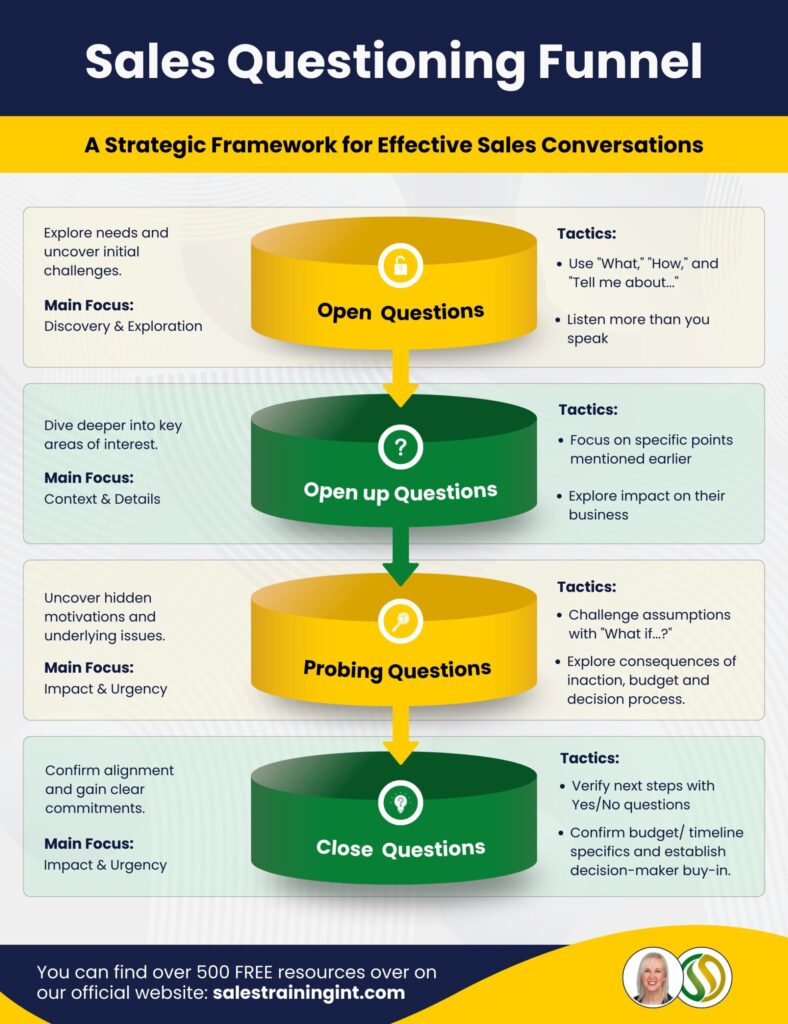
For a deeper look at how top performing salespeople put the customer at the centre of the sales conversation, download our free PDF: Customer Centric Selling: The Secret of Top Sales People.
Practise Active Listening
Listening properly means paying attention to what is said and what is left unsaid.
Salespeople should learn to summarise, clarify and check understanding before moving into recommendation mode.
Focus On Value Conversations
Value selling helps salespeople connect the offer to outcomes that matter to the buyer. This may include saving time, reducing risk, improving performance or solving a specific business problem.
Handle Objections Through Understanding
In transactional selling, objections can feel like barriers. In consultative selling, objections often reveal uncertainty, missing information or internal pressure. Reps who understand the buyer’s situation can respond with more confidence.
You can learn more about this in our video on How to Handle Sales Objections below:
Reinforce Learning Through Coaching
Sales teams do not change behaviour through one conversation. Managers need to review calls, coach live opportunities and reinforce good habits until consultative selling becomes part of everyday sales conversations.
How Sales Training Supports A Consultative Approach
Consultative selling takes practice. Many salespeople understand the idea but struggle to apply it consistently when targets, time pressure and buyer objections come into play.
At Sales Training International, we help sales teams develop the skills needed for stronger sales conversations. This can include questioning techniques, active listening, rapport building, identifying customer needs, value selling, objection handling and confident follow up.
For teams looking to strengthen this approach, our sales training courses can support better conversations across the full sales cycle. You can also review our sales course content to see areas such as value selling training, advanced selling skills and identifying customer needs.
Readers who are still exploring the topic may also find our free sales training resources useful.
To speak to our team about your sales training needs, you can call us on 01704 889325, email us at info@salestrainingint.com, or fill in our online contact form.
Consultative Selling Vs Transactional Selling FAQs
What is the difference between consultative selling and transactional selling?
Transactional selling focuses on completing a sale quickly, often around product, price or availability. Consultative selling focuses on understanding buyer needs before recommending a solution.
Is consultative selling better than transactional selling?
Consultative selling is usually better for complex B2B sales, high value decisions and relationship based selling. Transactional selling can still work well for simple, low risk purchases where the buyer already knows what they need.
When should transactional selling be used?
Transactional selling is useful when the sales cycle is short, the buyer’s need is clear and the purchase decision is straightforward. It is often seen in repeat purchases or high volume sales environments.
When should consultative selling be used?
Consultative selling should be used when the buyer needs guidance, the decision carries risk or the sale involves multiple stakeholders. It is especially useful in B2B sales where trust and value matter.
What is an example of consultative selling?
An example of consultative selling would be a salesperson asking about the buyer’s current challenges, goals and decision criteria before recommending a product or service.
What is an example of transactional selling?
An example of transactional selling would be a salesperson confirming price, availability and delivery for a product the buyer already knows they want.
How do you move from transactional selling to consultative selling?
Sales teams can move towards consultative selling by improving preparation, questioning, active listening, needs diagnosis and value conversations. Coaching and structured training help embed those behaviours.
What skills are needed for consultative selling?
The most important skills include questioning, active listening, rapport building, commercial awareness, needs identification, objection handling and follow up.
Is consultative selling the same as solution selling?
Consultative selling and solution selling overlap, but consultative selling usually starts earlier. It focuses on understanding the buyer’s situation before deciding which solution fits best.
Does consultative selling work in B2B sales?
Consultative selling is particularly useful in B2B sales because decisions are often complex, higher value and involve more than one stakeholder.