We talk a lot about intelligence in the workplace. But when ‘intelligence’ is mentioned we are often only thinking about one certain type (IQ). The ability to analyse, problem solve and make decisions.
However, what many don’t realise is there are actually three different intelligences types that determine how effective someone can be professionally. And the most successful people aren’t just strong in one but actually developed equally in all three.
Keep reading this short blog for:
- What the 3 Intelligences Are
- Why Each One Matters In the Workplace
- Examples of How They Can Look In the Workplace
What are the three intelligences?
IQ (Intelligence quotient)
This is the most well known type of intelligence. IQ measures how well someone can analyse information, identify opportunities, and make smart decisions. This is usually assessed through assessments that test a persons ability to solve, memorise and identify patterns.
EQ (Emotional Intelligent Quotient)
You may have heard of emotional intelligence, but did you know this is actually classed as 1 of the 3 intelligences? Having a strong EQ gives you the ability to understand and manage not just your own emotions, but also recognise and respond to emotions of others in the workplace. This intelligence is less about what you know, and more about how you show up, respond to others, and deal with difficult times.
SQ (Social Intelligence Quotient)
This is the intelligence many people aren’t aware of. SQ is how effectively someone can read a room and build relationships. You need the ability to interact and communicate with empathy and assertiveness. This includes your ability to build a network and maintain it over a long period of time.
Why Each Intelligence Matters in the Workplace
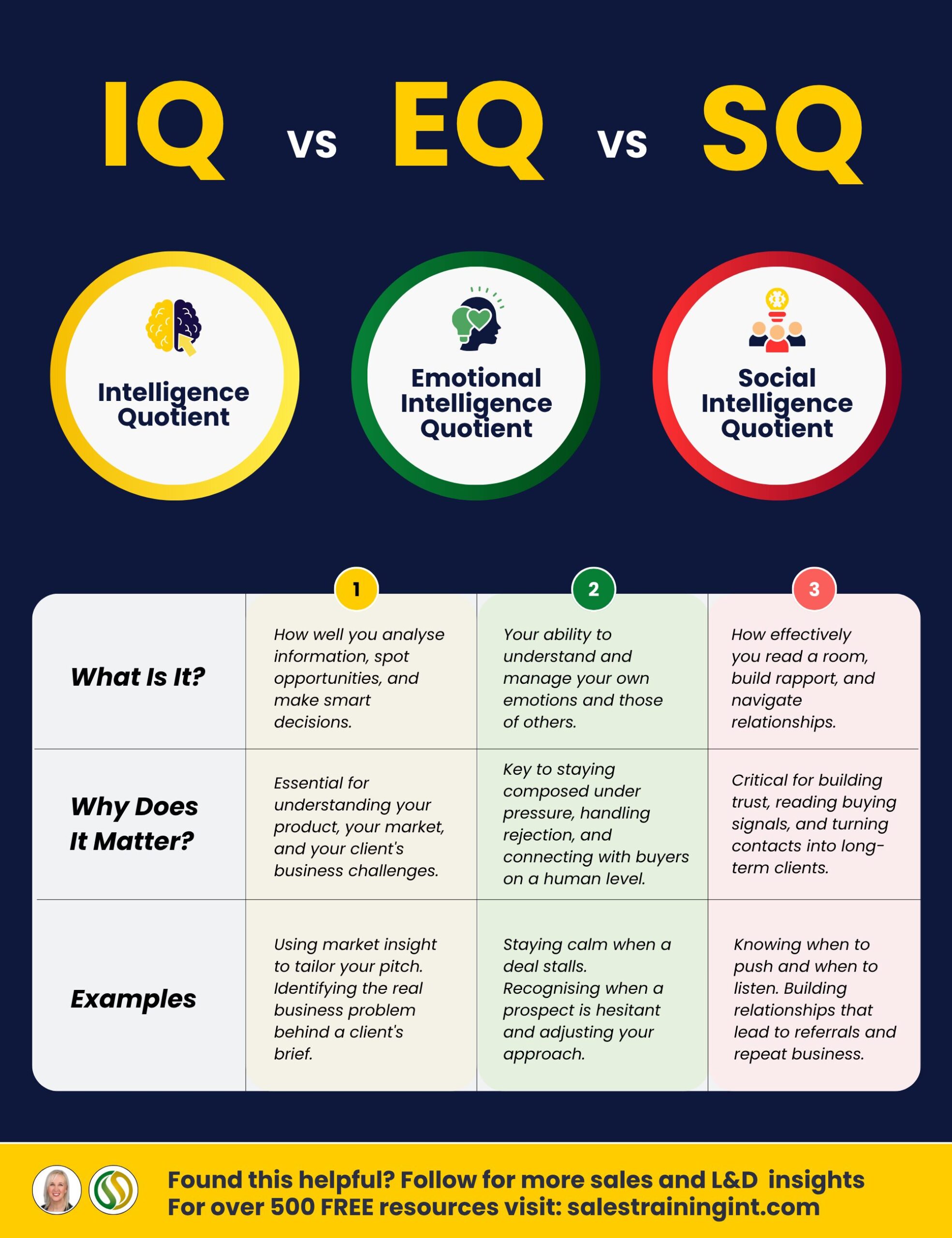
IQ matters because you need to actually understand what you’re doing and be able to know your role and business challenges. Whether you’re in sales, leadership, or another role, without IQ your conversations stay shallow and your solutions stay generic and will not stand out.
EQ matters because intelligence from IQ alone won’t cut it when it comes to relationship building. EQ is what helps you handle your emotions through difficult times and helps handle rejection without it getting you down. It also helps you connect with clients and colleagues in the workplace on a human level, which people prefer over logic.
SQ matters because any business runs on relationships, and social intelligence is what builds those relationships and trust over time. Social intelligence also helps you accurately read buying signals, helping turn clients into long term customers. Having a good SQ is what is mainly responsible referrals and repeat business.
Examples of What They Can Look Like In the Workplace (Sales Examples)
IQ looks like: Someone with a high IQ use smart market research and insights to help tailor their pitch and personalise it specifically to a clients needs and pain points. When you are handed a brief, someone with IQ goes above and beyond to identify the actual business problems that need solving, rather than just throwing a generic sales pitch at them.
EQ looks like: Someone with a high EQ is able to stay calm and collected when things don’t go the way they expected such as a deal not closing. Instead of pushing harder or going silent all together, they assess the situation and adjust their approach. Instead of them walking away, they recognise when prospect is hesitant and respond with emotion.
SQ looks like: Someone with a high SQ reads the room well, and knows the best time to push, and when to sit and listen. They spend their time investing in relationships even without an agenda. Overtime, they build relationships that will generate referrals and repeat business from people who generally trust them and enjoy working with them.
Most teams heavily focus primarily on IQ development and forget to invest in EQ or SQ. However, the professionals that really stand out are the ones who consistently bring all three intelligences to the table.
IQ grows through knowledge and critical thinking
EQ grows through self awareness and practice
SQ grows through coaching and building intentional relationship
If your team are knowledgeable but still struggle to convert or retain clients, the problem isn’t that you need staff with higher IQ, it’s down to the lack of EQ and SQ. That’s exactly where great training makes the difference.
Check out our YouTube video on Emotional Intelligence for Leaders:
If you’re looking to build confidence and improve your skills, our free sales resources are a good place to start. For expert advice, you can speak directly with our team on 0044 01704 889325, email us at info@salestrainingint.com, or fill in our online contact form to discuss how professional sales training can help you create clarity, momentum and better results.