
The MEDDIC sales process is one of the most effective sales qualification methods used by top performing B2B sales teams globally. It is used mainly for complex enterprise sales and to close bigger deals more predictably. It is a subject you should be including in sales training for complex or high value sales.
In this short blog, we will look at:
-
What MEDDIC is
-
When you should use MEDDIC
-
The benefits of using MEDDIC
What is MEDDIC?
MEDDIC is a popular sales qualification method used to help people determine whether a prospect is actually worth pursuing or not. It ensures you are asking the right questions, engaging with the right people, and not wasting any time on deals that just won’t close.
Developed by Dick Dunlull in the 1990s, MEDDIC has been used across many companies such as SalesForce, Hubspot, and countless other enterprise organisations. It is a sales method that all sales people should understand and have sales training to implement.
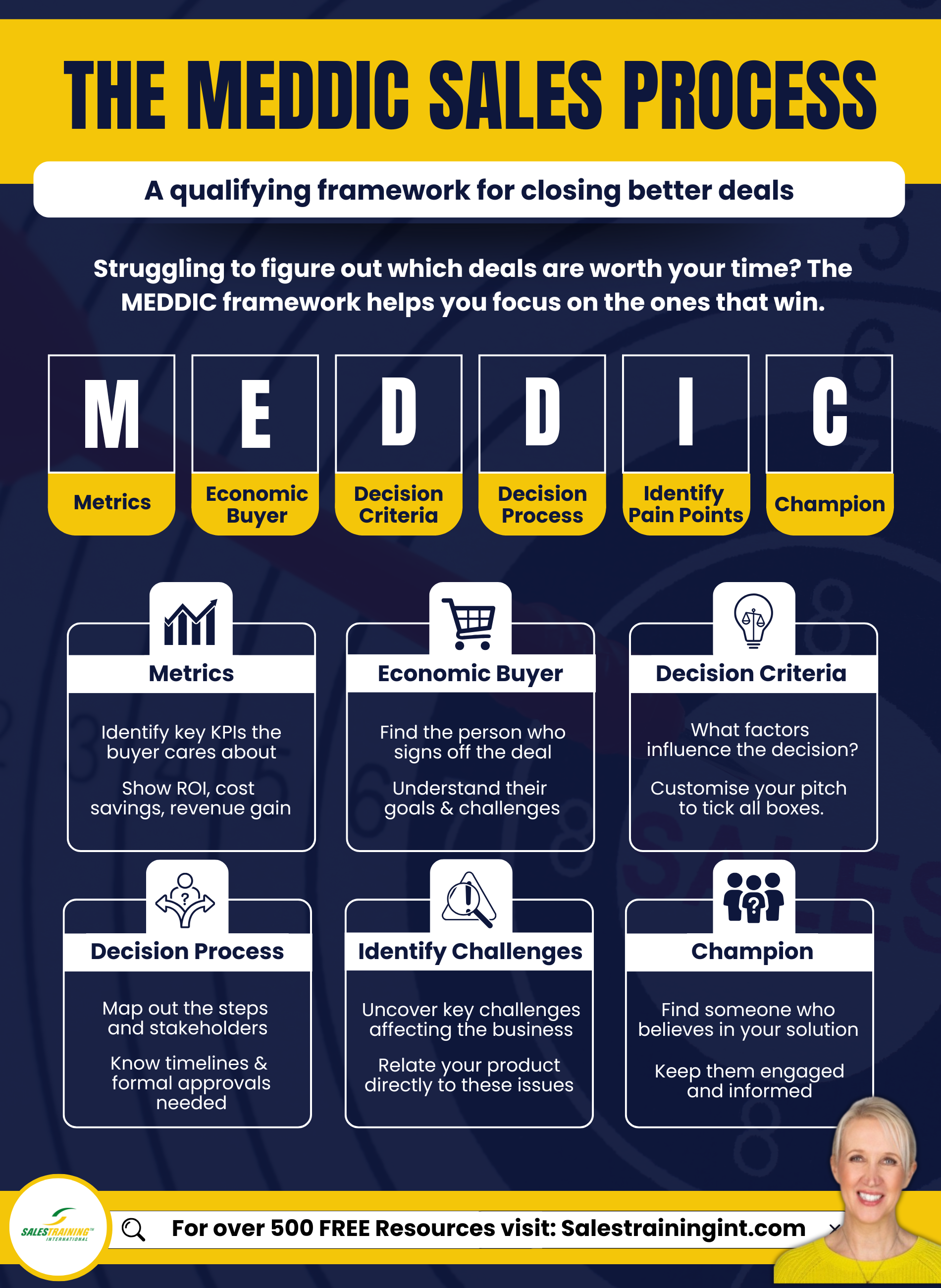
What Does MEDDIC Stand for?
Metrics
This is all about quantifiable measurable value your solution brings to the customer. You need to understand the economic benefits and what ROI your customer expects.
To do this, ask questions such as:
“What does this problem cost you currently?”
“What would a 20% improvement mean in financial terms?”
Avoid phrases such as:
“We’ll help you save money”
Instead say: “we’ll save you 500,000 annually by reducing your process time by 30%”
The key is getting concrete numbers. Real metrics create urgency and justify the investment.
Economic Buyer
This is the person who controls the budget and has the ultimate authority to sign the contract. Not the person you’re talking to, but the person who can actually say yes and release the funds.
You need to identify them early and gain access to them. You can do this by asking who approves the purchase of this size or who owns the budget for this initiative. If you haven’t engaged an economic buyer, you don’t have a real deal. You’re just educating someone who can’t buy.
Decision Criteria
These are the formal and informal factors your prospect will use to evaluate solutions and make their final choice. You need to understand what their must-haves and their nice to haves are.
What technical requirements exist? What business outcomes are they measuring against? You can do this by asking
“When you evaluate solutions like this, what criteria matter the most?
“What would make one vendor stand out over another?”
The goal is to shape this criteria so that your solution aligns perfectly to their goals or problems. If you understand their scorecard, you can position yourself to win.
Decision Process
This is the step-by-step journey your prospect must go through to make a purchase from evaluation to legal review to final approval. You need to map this out completely. Ask what steps need to happen before we can finalise an agreement or who else needs to be involved in approving this.
Understanding the decision process helps you avoid surprises, identify potential roadblocks, and accurately forecast when a deal will close. Don’t assume, ask and verify every single step.
Identify Pain
This is about understanding the critical business problem or pain points that’s driving this purchase. What’s hurting them right now? What’s keeping the economic buyer up at night? The pain needs to be significant enough to drive action. Ask:
“What happens if you don’t solve this problem?”
“What’s at stake if things stay as they are?”
Without genuine, compelling pain, deals stall. People buy when the cost of staying the same exceeds the cost of change. Your job is to uncover and amplify that pain. Then position your solution as the cure.
Champion
This is your internal advocate. Someone inside the prospects organisation who actively sells on your behalf when you’re not in the room. Your champion believes in your solution, has influence, and has access to the economic buyer. They can navigate internal policies and help you win.
Ask yourself, who’s truly advocating for us internally? And would this person put their reputation on the line for our solution? Build your champions carefully. Give them the tools, data, and confidence they need to sell for you. They’re often the difference between winning and losing.
When to Use MEDDIC
So when should you use the MEDDIC process? It’s ideal for complex B2B sales with longer cycles, multiple stakeholders, and significant deal values. Typically, enterprise or mid-market sales with contracts over 50,000 or 100,000.
If you’re selling to organisations with formal procurement processes, multiple decision makers, and technical evaluations, MEDDIC is also the ideal framework. It’s less necessary for transactional, low touch, low value sales.
Use it from your very first discovery call and continuously throughout the sales cycle to qualify and re-qualify opportunities.

MEDDIC Benefits
Better qualification
You’ll stop chasing bad deals and focus your energy on opportunities you can actually win.
Shorter sales cycles
When you know the process and engage the right people, things move faster.
Higher win rates
MEDDIC helps you identify and address gaps before they kill your deal.
More accurate forecasting
You can predict which deals will close with much greater precision.
Larger deal sizes
When you’re speaking the language of metrics and engage economic buyers, you can command premium prices.
In summary, MEDDIC transforms sales people from those who just pitch features into a strategic business consultant or even better partner. It gives you a systematic way to qualify hard, navigate complexity, and close bigger deals.
Start applying MEDDIC in your next sales conversations. You’ll immediately see which deals are real and which are just time wasters.
Learn even more by watching our latest YouTube video on MEDDIC here:
If you’re looking to build confidence in your sales conversations, our free sales resources are a good place to start. For expert advice, you can speak directly with our team on 0044 01704 889325, email us at info@salestrainingint.com, or fill in our online contact form to discuss how professional sales training can help you create clarity, momentum and better results.